- Home Page /
- Industrial Supplies /
- Industrial Electrical /
- Semiconductor Products /
- Transistors /
- BJT /
- Transistors Bipolar - BJT PNP Gen Pur Power (...
0 ratings

Item #:
147224358
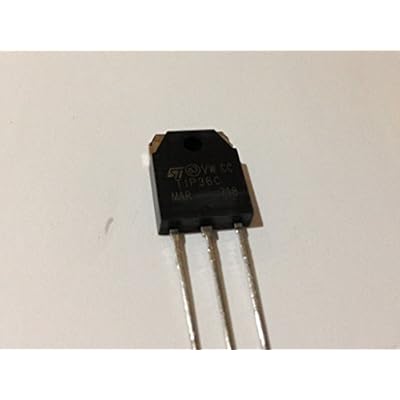
Transistors Bipolar - BJT PNP Gen Pur Power (1 piece)
Item #:
147224358
LKR 5085
Price Details
Excluding Shipping & Custom charges ( Shipping and custom charges will be calculated on checkout )
*All items will import from US
0 ratings
Write a review
In stock
 Imported from USA store
QTY:
Order now and get it around Thursday, June 25
Secured transaction
Ubuy works hard to protect your security and privacy. Our advanced payment security system ensures confidentiality by encrypting your information during transmission using AES (Advanced Encryption Standards) and SSL (Secure Socket Layer) protocols. Your payment details are 100% secure as we do not share your payment details with third party sellers.
Our Top Logistics Partners


Fast
Shipping

Free
Return*

Secure Packaging

100% Original Products

PCI DSS Compliance

ISO 27001 Certified


Note: Step Down Voltage Transformer required for using electronics products of US store (110-120). Recommended power converters Buy Now.


What Stands Out
High Efficiency
Designed for optimal performance, this PNP bipolar transistor ensures minimal energy loss, making it ideal for power applications in various electronic circuits.
Versatile Applications
Perfectly suited for a wide range of uses, from amplifiers to switching, this transistor meets diverse circuit needs, adding value for engineers and hobbyists alike.
Reliability
Built with durable materials, this transistor guarantees long-term reliability and stability in demanding environments, providing peace of mind for users in critical applications.
Product Details
- TIP36C
- Transistor PNP Tran 100V 25A
- Brand New by SGS
- Brand New and Original by SGS
Product Technical Details
| Package Dimensions | 6.4 x 3.4 x 0.1 inches |
| Item Weight | 0.01 ounces |
| Manufacturer | STMicroelectronics - SGS THOMSON |
| Item model number | TIP36C |
Who Should Buy?

-
Hobby Electronics
Perfect for hobbyists building simple circuits, providing reliable performance in projects involving power switching and amplification.
-
Educational Use
Ideal for students learning about transistors and circuit design, facilitating hands-on experimentation with PNP transistor characteristics.
-
DIY Audio Projects
Excellent choice for audio amplifier projects, enhancing sound quality through efficient power handling and low distortion.

-
High-Frequency Applications
Not suitable for circuits requiring high-speed switching, as BJT PNP transistors have limitations in frequency response.
-
Low-Power Devices
Less effective in ultra-low power applications where efficiency is critical, as they may consume more power than necessary.
-
Professional Needs
May not meet the demands of professional applications requiring specialized or high-performance transistors for critical systems.
Product Description
Have any Query? Chat with us
Customer Questions & Answers
-
Question:
What is a Bipolar Junction Transistor (BJT)?
Answer: A Bipolar Junction Transistor (BJT) is a type of transistor that uses both electron and hole charge carriers. It has three regions: the emitter, base, and collector. In PNP transistors like the BJT PNP, the majority charge carriers are holes. This design allows for effective amplification and switching of electronic signals. BJTs are widely used in applications such as audio amplifiers, signal modulation, and in digital circuits where fast switching times are critical. -
Question:
What are the key uses of PNP transistors?
Answer: PNP transistors are commonly used in various electronic applications, primarily where switching and amplification are required. They can serve effectively in voltage regulation circuits, audio amplification, and as components in analog applications. Additionally, they can be used in inverter circuits, motor control systems, and signal modulation, showcasing their versatility in both industrial and consumer electronics. Their configuration offers superior performance in certain applications compared to NPN transistors. -
Question:
How do you identify a PNP transistor in a circuit?
Answer: To identify a PNP transistor in a circuit, you can look for its specific configuration and behavior. PNP transistors typically have three terminals: emitter (E), base (B), and collector (C). If an increased voltage at the base leads to current flow from the emitter to the collector, it's a sign of a PNP transistor. In a circuit, the emitter is usually connected to a higher voltage relative to the collector. Understanding this can help when troubleshooting or designing circuits. -
Question:
What are the advantages of using PNP BJTs over NPN types?
Answer: PNP BJTs have several advantages over NPN transistors, particularly in specific circuit configurations where a high-side switching is advantageous. They handle lower supply voltages more effectively and often provide better performance in circuits that require higher linearity, such as audio amplifiers. Additionally, when designing mixed-signal or power electronics systems that interface with battery sources, PNP transistors can simplify the design and increase efficiency, making them an essential component in many applications. -
Question:
What are the characteristics to consider when choosing a PNP transistor?
Answer: When selecting a PNP transistor, consider its current rating, voltage rating, gain (hFE), and frequency response. Understanding these characteristics is crucial for ensuring the transistor can handle the required electrical conditions in your application. For example, higher current ratings are important in power applications, while gain impacts amplification efficiency. Ensuring the right specifications aligns with your circuit requirements leads to optimal performance in devices like audio amplifiers or switching power supplies. -
Question:
Can I use a PNP transistor in an NPN circuit?
Answer: Using a PNP transistor in an NPN circuit is generally not advisable due to their opposite biasing and operational principles. PNP transistors require a positive base-emitter voltage for operation, while NPN transistors require a negative bias. Mixing them can lead to malfunction or damage. If the application requires switching control, using appropriate transistors based on the circuit design ensures effective and reliable performance. Instead, consider integrating complementary pairs for better functionality. -
Question:
What is the significance of a general-purpose PNP transistor?
Answer: A general-purpose PNP transistor is designed for versatility and can be used in various applications without specific adaptations. Its significance lies in its ability to handle average current levels and control switching under moderate conditions. For hobbyists and professionals alike, such transistors provide the flexibility to utilize them across multiple projects, like in signal amplifiers and simple switching circuits, making them ideal for prototyping and practical uses in everyday electronics. -
Question:
What safety precautions should I take when using transistors?
Answer: When working with transistors, it's essential to take safety precautions such as ensuring proper heat dissipation, avoiding overcurrent conditions, and utilizing the correct biasing. Keep in mind that overheating and excessive current can damage the transistor and lead to circuit failure. Using appropriate resistors and heat sinks can help manage power dissipation effectively. These practices ensure the longevity and reliability of components in your electronics projects. -
Question:
How do I connect a PNP transistor in a circuit?
Answer: To connect a PNP transistor in a circuit, you should attach the emitter to a higher voltage than the collector. Connect a resistor to the base to control the current flowing into it. When the base is pulled low (below the emitter voltage), it allows current to flow from the emitter to the collector, turning the transistor on. This configuration is commonly used in switching applications where controlling a load from a high voltage source is needed. Make sure to calculate the base resistor value correctly for optimal performance. -
Question:
Where can I buy Transistors Bipolar - BJT PNP Gen Pur Power (1 piece) in Sri Lanka?
Answer: You can buy Transistors Bipolar - BJT PNP Gen Pur Power (1 piece) from Ubuy. They offer a diverse selection of electronic components, ensuring that you can find the specific products you need for your projects. Ubuy's platform is user-friendly, allowing for seamless browsing and purchasing of various transistors, ensuring you can easily obtain high-quality electronics.
STMicroelectronics - SGS THOMSON BJT TIP36C Editorial Review
No editorial reviews found
Customer Reviews & Ratings
1 customers ratings
-
5 Star
100%
-
4 Star
0%
-
3 Star
0%
-
2 Star
0%
-
1 Star
0%
Review this product
Share your thoughts with other customers
Pros
- High reliability and stability
- Great for various applications
- Easy to use for beginners
- Excellent performance in circuits
- Affordable for hobbyists
Cons
- Limited information on technical specs.
Product Price History
Important information
- Limitations : For products shipped internationally, please note that any manufacturer warranty may not be valid; manufacturer service options may not be available; product manuals, instructions, and safety warnings may not be in destination country languages; the products (and accompanying materials) may not be designed in accordance with destination country standards, specifications, and labeling requirements; and the products may not conform to destination country voltage and other electrical standards (requiring use of an adapter or converter if appropriate). The recipient is responsible for assuring that the product can be lawfully imported to the destination country. When ordering from Ubuy or its affiliates, the recipient is the importer of record and must comply with all laws and regulations of the destination country.
- Not all the products listed on Ubuy are for sale, as Ubuy is a global search engine. Products are subject to export/trade regulations.
LKR 5085
Order now and get it around Thursday, June 25
This item is not restrict in my country.(Please click on above link if this item is not restrict in your country, So our team will review and allow.)
QTY:
Secured transaction
Ubuy works hard to protect your security and privacy. Our advanced payment security system ensures confidentiality by encrypting your information during transmission using AES (Advanced Encryption Standards) and SSL (Secure Socket Layer) protocols. Your payment details are 100% secure as we do not share your payment details with third party sellers.
Our Top Logistics Partners
Fastest cross-border delivery